
Find the path that's right for you.
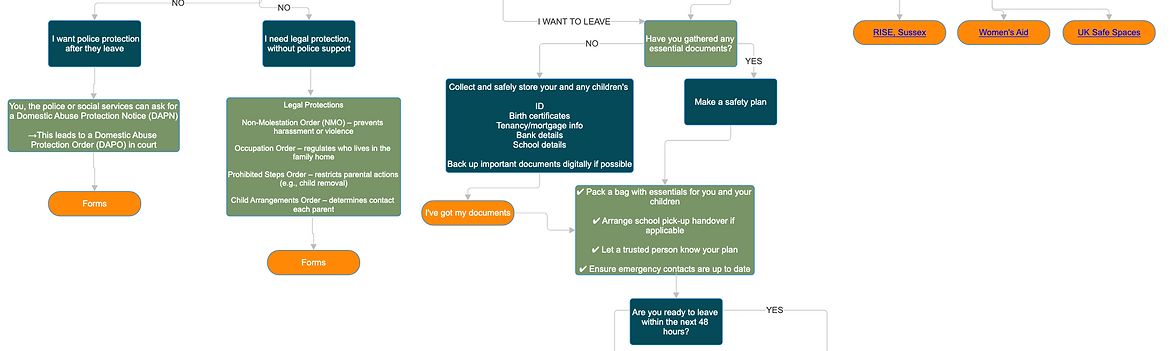
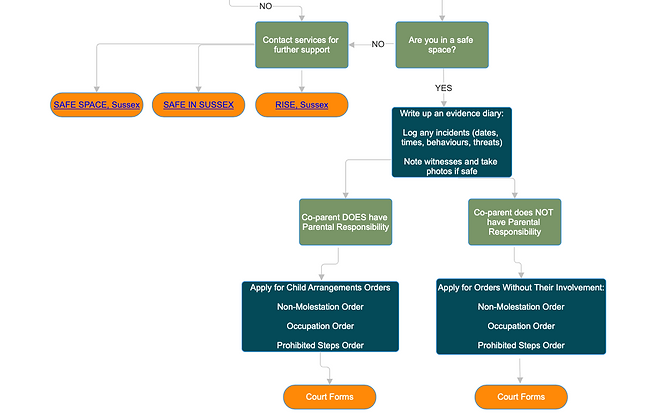
Leaving a relationship can feel overwhelming, especially when there are legal questions regarding children and it seems like your co-parent holds all the power. This section is designed to help you take those first steps with clear and accessible information about the laws that are in place to help protect children and parents. The flowchart will help guide you through your situation and point you to the most relevant Phoenix Family Law resources. If you have more detailed questions related to housing, finances or divorce we signpost you to trusted national and local specialist services.
Below, there are some common answers and questions to help you get started, or you can go directly to the flowchart.
Legal rights when you want to leave your relationship
Q: Can I move to a different part of the UK with my children when I leave?
A: The Children Act 1989 (Section 13) requires consent from everyone with parental responsibility or a court order to relocate children within the UK if it significantly changes contact arrangements. There is no legal definition for 'significantly changes', the court will decide whether a change is 'significant' if the changes make contact with the other parent unworkable to the point that their relationship is put at risk.
-
Services:
Q:Do I have to tell my ex where I am going if there has been abuse?
A: The Family Procedure Rules 2010 (Part 12) allows the court to withhold address details if there are safeguarding concerns. The Domestic Abuse Act 2021 reinforces protection for survivors and children as victims in their own right. Depending on your circumstances, you can use our flowchart to decide on next steps or seek further support from specialist services.
-
Services:
Q:What happens to the tenancy or mortgage if I leave but I’m on the agreement?
A:The Family Law Act 1996 (Part IV) allows for Occupation Orders to regulate who lives in the home. If you need more information on an Occupation Order, you can go directly to our 'Court Forms' section which has a walkthrough video on how to fill out and file this type of form.
If you need more information about how the Housing Act 1985 and Housing Act 1988 will affect you, please contact specialist services:
-
Services:
Q: Can I stop my ex from taking the children from school without my consent?
A: In law, if a parent has Parental Responsibility, they have the legal right to pick up your child(ren) from school, unless there is a court order in place to prevent it. If there is a safeguarding issue that would put your child in danger if they had contact with the other parent, or the other parent has picked up the child(ren) without your knowledge or consent, contact the school and police immediately.
To prevent the other parent from legally being able to collect your child(ren) from school or take them out of school, you will need a Prohibited Steps Order (Children Act 1989, Section 8) which can prevent removal from school or changing school without agreement. A Child Arrangements Order or Specific Issue Order can also prevent the other parent from collecting the child(ren) from school without your consent. You can go directly to our 'Court Forms' section for guides on how to fill out these forms here:
If your child has been collected from school without your consent and you believe the other parent has left the country, please call the police immediately. You can also see further information about this urgent issues here:
-
Services:
Q: Can I get financial help immediately after leaving?
A: The Child Support Act 1991 says that each parent of a 'qualifying child' is responsible for their financial maintenance, even if they don't have parental responsibility or live with the child. If you meet the eligibility criteria, you may qualify for Universal Credit under the Welfare Reform Act 2012. If you are married, the Matrimonial Causes Act 1973 and Civil Partnership Act 2004 outline how spousal maintenance payments work and your rights to the family home, please see the specialist services below for more information:
-
Services:

Next Steps
After using the flowchart, how do you feel?
1
'I feel clear about my options'
After identifying your legal rights and taking steps to ensure you and your children are safe, your next move might be to gather evidence and consider which steps to take to start your legal journey. You may want to think about whether you need a lawyer, click below for more information.